
How to count carbs for a toddler with type 1 diabetes
A parent's practical guide to counting carbs for a toddler with T1D: labels, kitchen scales, household portions and keeping notes that help next time.

Tyler
· 2 min read
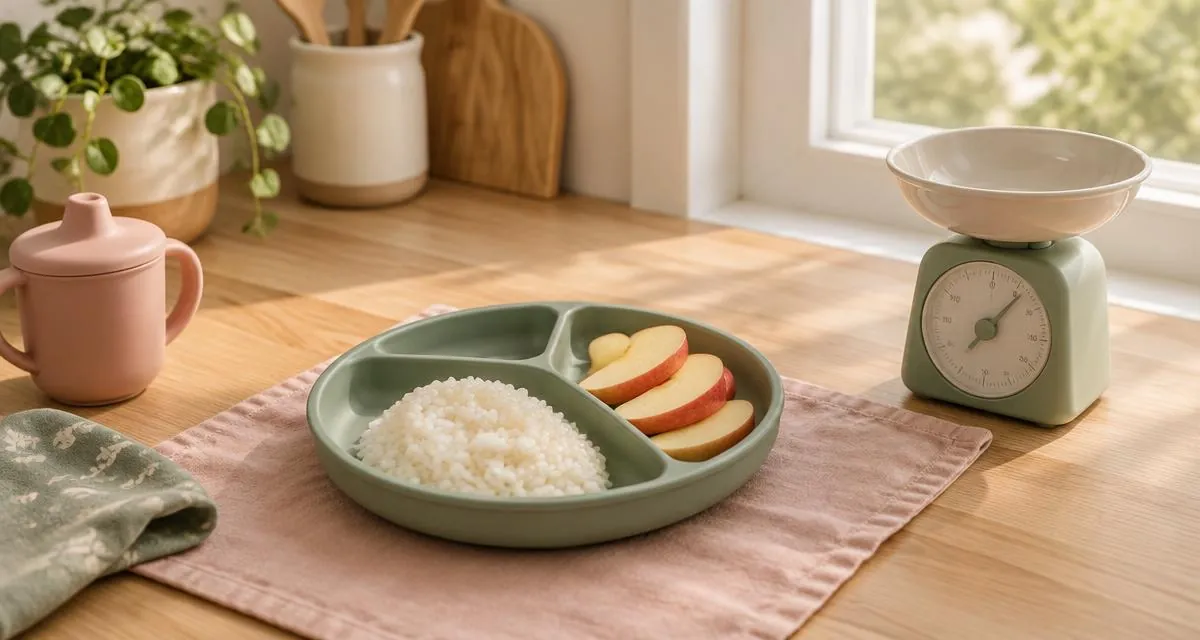
Carbohydrate counting for a toddler starts with two questions: what food is being offered, and how much will your child eat? Labels, a kitchen scale and a short shared food list make those questions easier. The goal is a useful estimate, not a perfectly clean plate or a guarantee about the next glucose reading.
Start with serving size and Total Carbohydrate
On a U.S. Nutrition Facts label, find serving size and Total Carbohydrate in grams. Do not use sugars or added sugars alone: they do not include all carbohydrate. Serving size describes the reference portion, not how much your toddler must eat. Check servings per container too; one packet may contain several servings.
Suppose a hypothetical cereal label lists 24 g total carbohydrate per 40 g cereal. A 15 g portion contains 15 × 24 ÷ 40 = 9 g carbohydrate. Food weight and carbohydrate weight are different measurements. Count milk separately. Do not automatically subtract fiber or sugar alcohols or substitute a net-carb claim; use the counting method your team has taught.
Match the weight to the right food information
Place an empty bowl on the scale, reset it to zero, then add food. For unlabeled foods, choose a reliable food-composition reference and the closest description. Raw, cooked, drained and dried versions are not interchangeable. Weigh the edible portion, excluding peel, stones or bones that will not be eaten.
For a hypothetical cooked food containing 20 g carbohydrate per 100 g, a 35 g portion contains 35 × 20 ÷ 100 = 7 g carbohydrate. The formula works only when the reference matches the weighed food. For homemade mixtures, add the ingredients' carbohydrate and divide according to finished portions or weight, accounting for reasonably even distribution.
Make small portions easier to track
Offer manageable amounts and record additional servings. Weigh foods separately when practical: missing weight from a mixed plate cannot reveal which foods were eaten. Spilled, dropped or shared food was not swallowed. Before-and-after weighing is an estimating tool, not an instruction to delay insulin until eating ends. Follow the team's food-refusal plan when intake differs from expectations.
- Record food, brand or recipe, portion weight and source of the carbohydrate estimate.
- Track milk, drinks, dips and second helpings separately.
- Use the same bowl or account for its weight when checking leftovers.
- Mark uncertain intake honestly rather than adding false precision.
- Ask your team what to do if a child refuses food after treatment has already been given.
Give caregivers the same starting point
Create a small reference list for familiar foods, including source, portion weight and carbohydrate estimate. Update it when brands or recipes change. Keep food information separate from prescribed treatment instructions. Another caregiver needs the current plan, supply location and contact details, not just a list of numbers.
Bring uncertain calculations to the diabetes dietitian rather than repeatedly adjusting estimates to explain glucose readings. Growth, activity, illness and treatment factors matter too. Persistent refusal, a shrinking range of accepted foods or growth concerns deserve professional support. Counting should help your toddler eat, not turn every meal into a test.
Sources
About Tyler
Founder of Carolyn, parent of a child with type 1 diabetes. He built Carolyn to ease the daily mental load of T1D for his family.
Remember every meal, together
Carolyn keeps your family's carbs, doses and outcomes in one shared place.
Join the Carolyn waitlist