
Carb counting for picky eaters and grazers
Practical ways parents count carbs when a child with type 1 diabetes grazes, refuses food or leaves half the plate. Questions to bring to your care team.

Tyler
· 2 min read
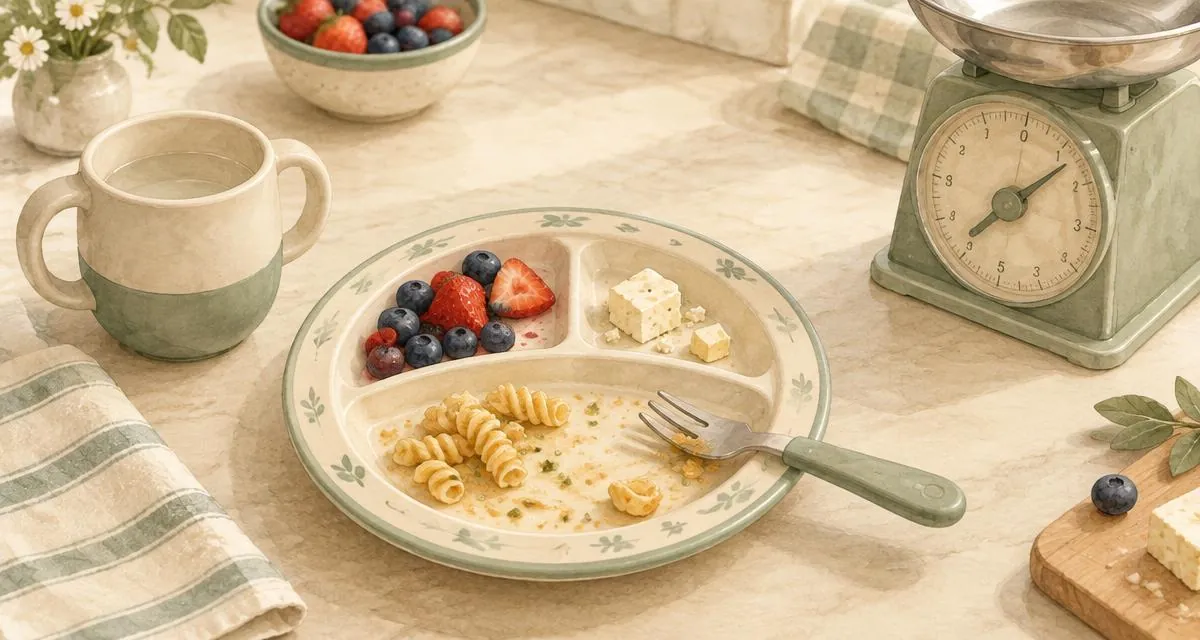
Picky eating makes carbohydrate counting difficult because the offered meal and eaten meal may differ. Grazing adds another problem: small amounts disappear across a long afternoon. A workable system makes intake visible without pressuring a child to finish. Focus on tracking uncertainty and getting a written plan for moments when eating does not go as expected.
Separate foods when it makes counting easier
A small bowl of crackers beside a sandwich is easier to track than crackers scattered across a shared table. Offer manageable starting portions and record additions. Include familiar accepted foods, while discussing persistent selectivity with a pediatric dietitian. Do not remove whole food groups simply to simplify diabetes tasks.
Use Total Carbohydrate and serving weight, not sugars alone. Suppose hypothetical crackers provide 18 g carbohydrate per 30 g crackers. You serve 20 g and find 5 g left. If the remaining 15 g was eaten, the estimate is 15 × 18 ÷ 30 = 9 g carbohydrate. Subtract dropped or shared crackers too. Use actual package values, not these invented example values.
Know what leftover weighing cannot tell you
Before-and-after weighing works best for one food with fairly uniform composition. It is less reliable for mixed meals: a lighter plate might mean vegetables were eaten but pasta was left, or the opposite. Sauces and spills add uncertainty. Do not convert all missing plate weight into carbohydrate using one food's value.
Record the estimate and limitations rather than inventing precision. Measuring intake afterward does not tell you when insulin should be given. If food was already covered by treatment and your child refuses it, use the team's food-refusal plan. Seek prompt advice when the instructions do not fit the situation, especially with vomiting or suspected low glucose.
Give grazing a simple record
Ask the dietitian about an age-appropriate meal and snack routine. Predictable opportunities to eat can simplify tracking, but rigid restriction is not the answer to every appetite. A snack record should capture what was consumed, including drinks, rather than only what was packed. Do not automatically subtract fiber or use net carbs unless that is the team's individualized method.
- Use one shared record so caregivers can see snacks already documented.
- Write the time, food, portion weight and estimated carbohydrate.
- Keep packaging or a label photo for unfamiliar foods.
- Mark uncertain amounts rather than treating guesses as exact.
- Identify prescribed low treatments as treatments, not ordinary grazing.
Ask for a specific food-refusal plan
Ask what to do when your child refuses planned food, requests an alternative, vomits or eats much less than expected. Clarify monitoring, who to call and what information they need. Have regular caregivers learn the same instructions. A general article cannot safely choose insulin timing or adjustments for your child.
For a suspected low, follow individualized treatment and rechecking instructions rather than waiting to complete the log. If swallowing is unsafe, follow the emergency plan, use prescribed glucagon as directed and call emergency services. Ongoing distress, swallowing difficulty or growth concerns also warrant professional assessment. Making meals calmer is part of care, not a reward for perfect numbers.
Sources
About Tyler
Founder of Carolyn, parent of a child with type 1 diabetes. He built Carolyn to ease the daily mental load of T1D for his family.
Remember every meal, together
Carolyn keeps your family's carbs, doses and outcomes in one shared place.
Join the Carolyn waitlist